Portfolio concept / Concept
Case study / 07LUMEN 17 Residences.
A residential project presented as a decision, not just an image.
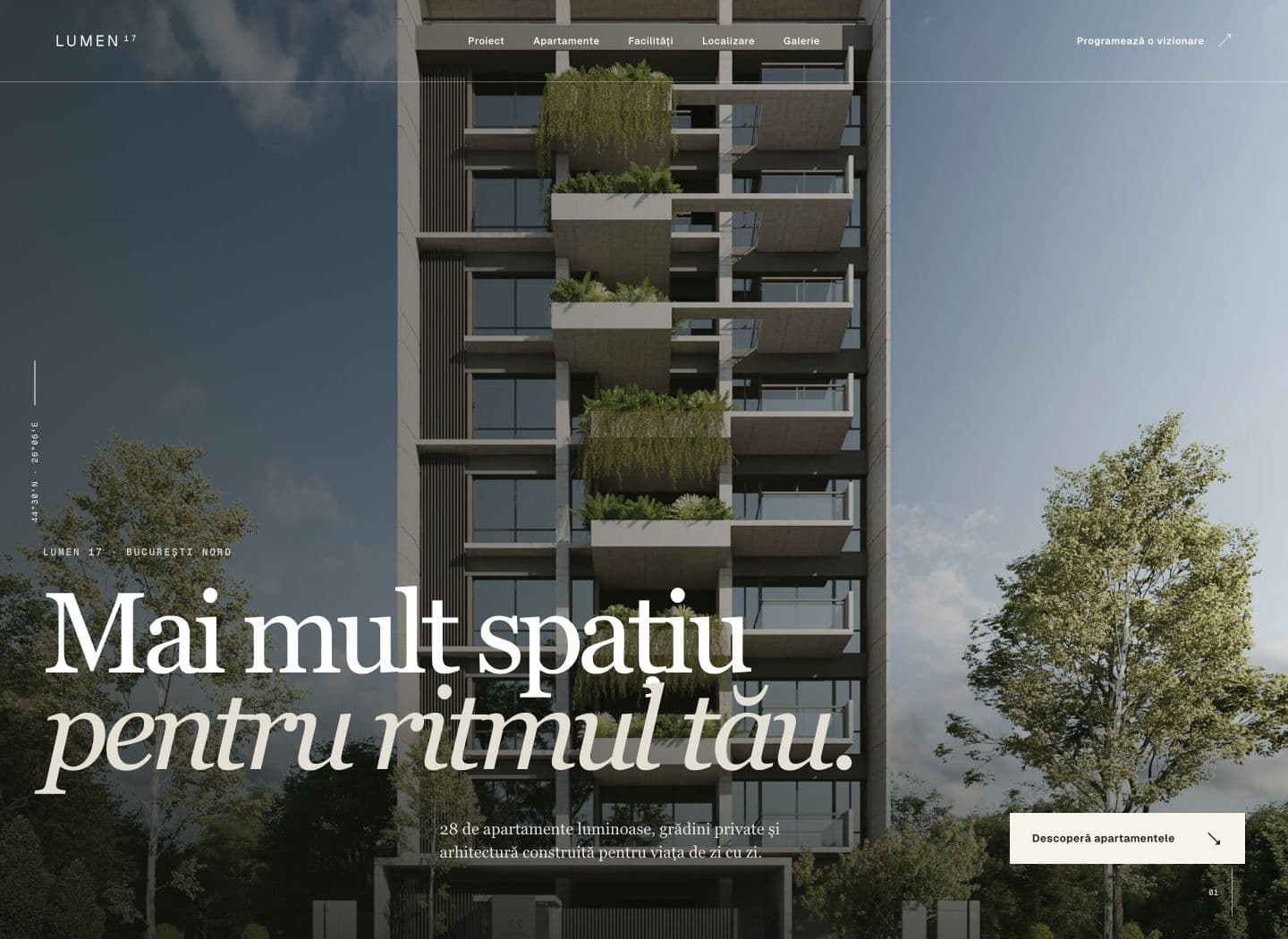
01 / The project
LUMEN 17 is a digital concept for a boutique residential development in northern Bucharest, where architecture, apartment inventory and viewing requests form one journey.
Property websites can look impressive yet leave important questions for a later conversation. This experience needed to pair desire with concrete details about layouts, areas, availability and the next step.
Premium home buyers and residential investors
02 / The insight
A qualified enquiry appears when aspiration meets clarity. People want to feel the place and know whether a suitable home exists before booking a viewing.
I used a light editorial direction, large typography and architectural imagery for atmosphere, then progressively introduced layouts, filterable units, location, process and the enquiry form.
03 / In detail
The experience, up close.
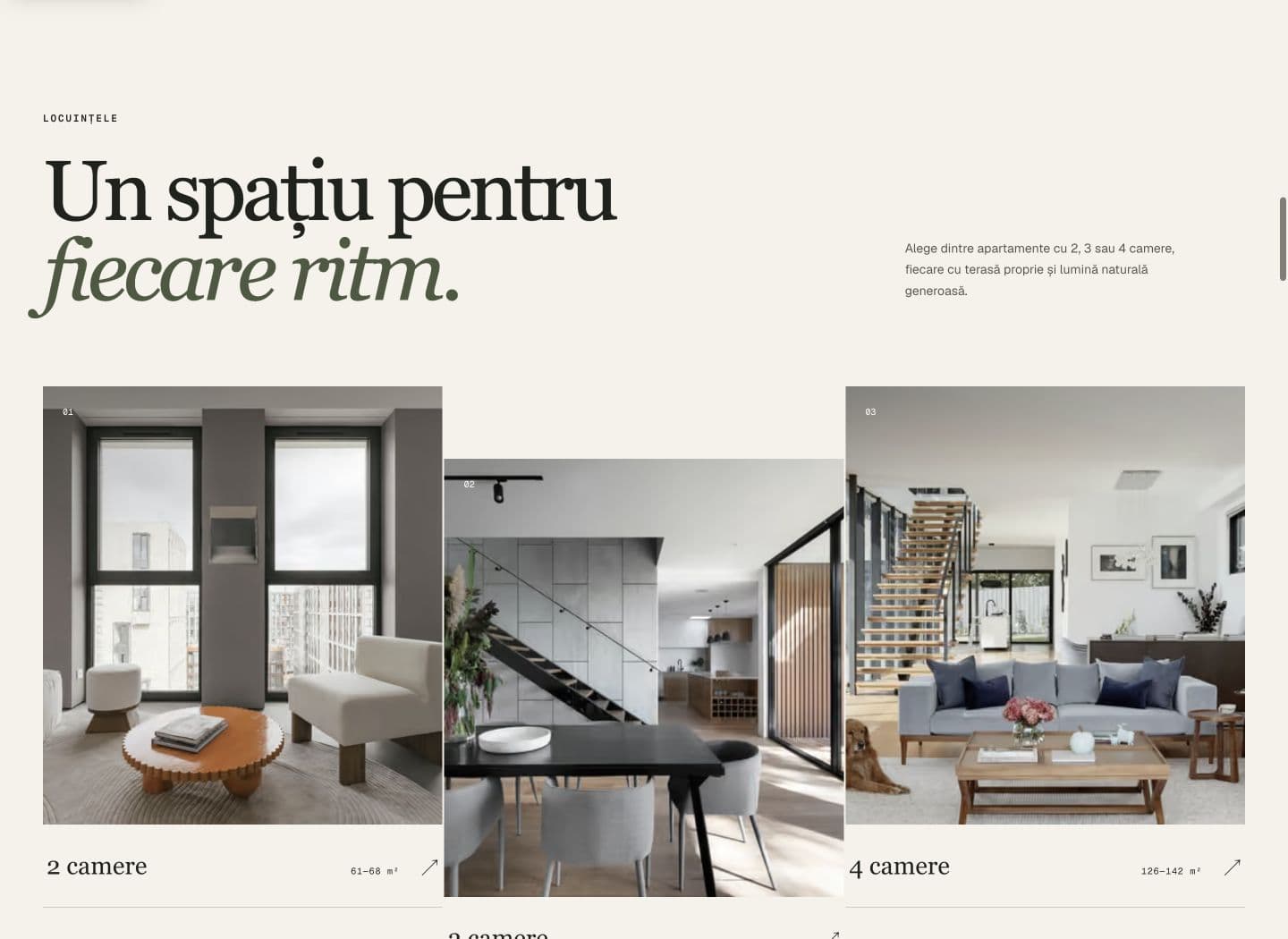
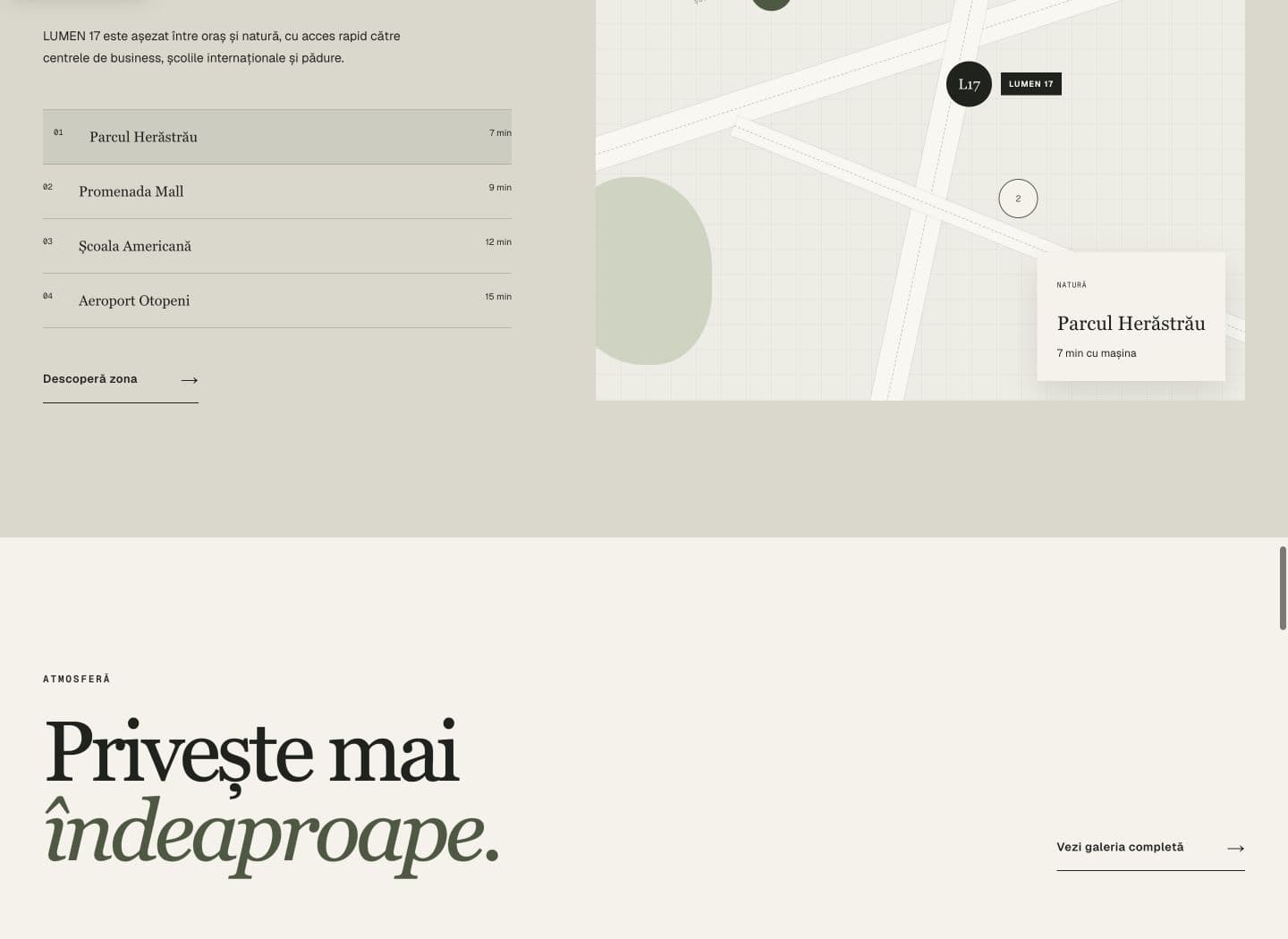
04 / The decisions
What I chose and why.
From layout to apartment
Two, three and four bedroom categories orient visitors before a filterable inventory adds floor, area, terrace, orientation and status.
Location provides context
A schematic map and nearby landmarks help buyers understand the setting.
The enquiry follows the choice
A viewing request appears after visitors have enough information to express a meaningful preference.
05 / The outcome
What the work delivers.
Boutique, not generic
Editorial pacing, materials and imagery create a calm residential identity.
Information at the right time
Area, availability and location details arrive as the visitor narrows the choice.
A more useful enquiry
The viewing request is informed by the apartment the visitor has explored.